October 9, 2017. The Tubbs Fire jumped Highway 101 and burned 5,636 structures in a single night, most of them in Coffey Park and Fountaingrove. Two years later the Kincade Fire took out chunks of north county; the next fall, Glass Fire hit Skyhawk and Oakmont.
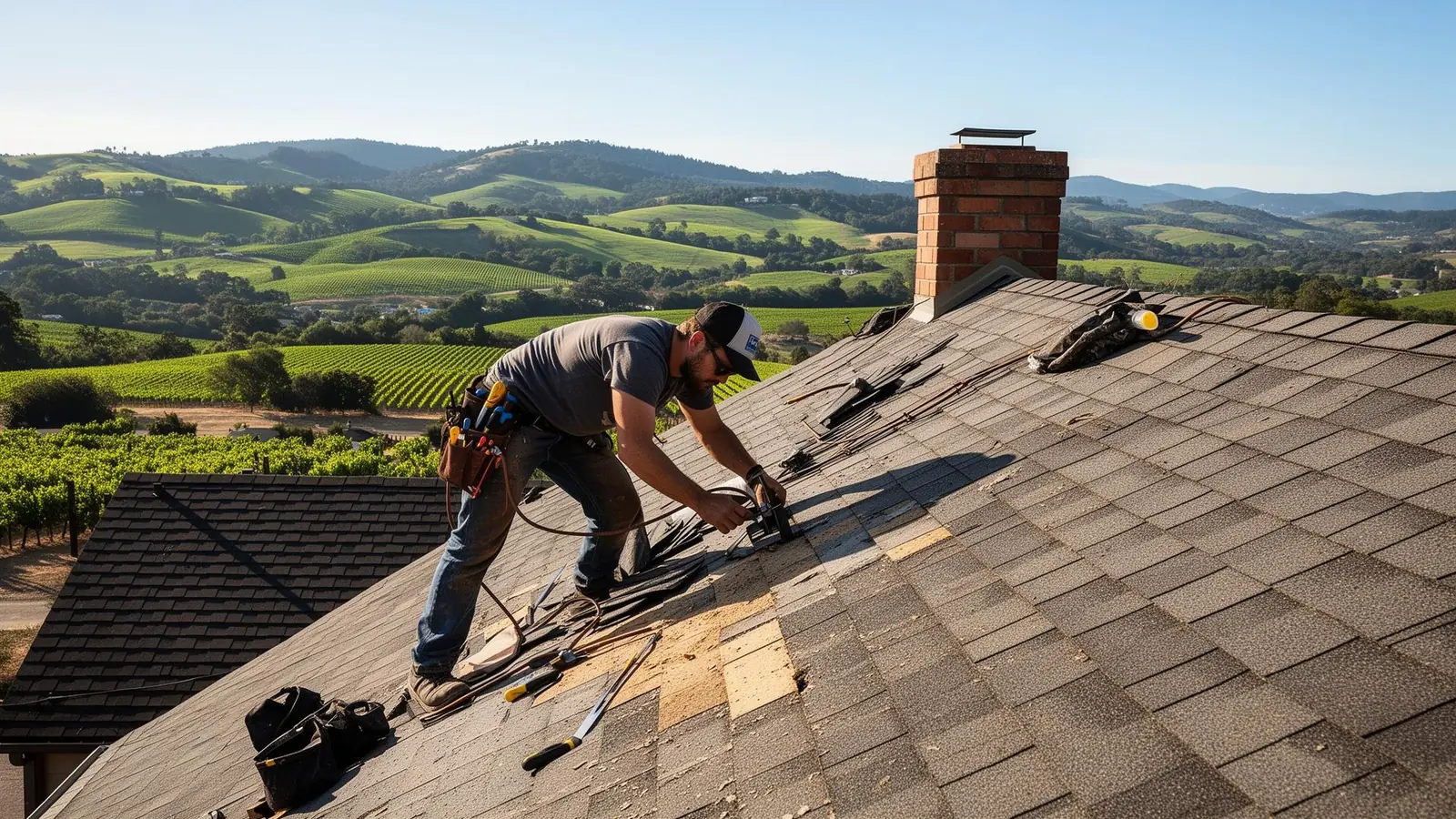
We've re-roofed in every one of those footprints. Here's what actually works against wildfire — and what's marketing.
Class A Is the Floor, Not the Ceiling
Class A is the highest fire rating in ASTM E108 — the assembly resists severe fire exposure for at least two hours, doesn't produce flying brands, and won't allow flame penetration through the roof deck. California requires it on all new and replacement roofs in High and Very High Fire Hazard Severity Zones.
But Class A is an assembly rating, not a material rating. The same shingle can be Class A over one underlayment and Class C over another. What matters is the entire stack: deck → underlayment → covering → fasteners → ventilation.
The Three Materials That Make Sense Here
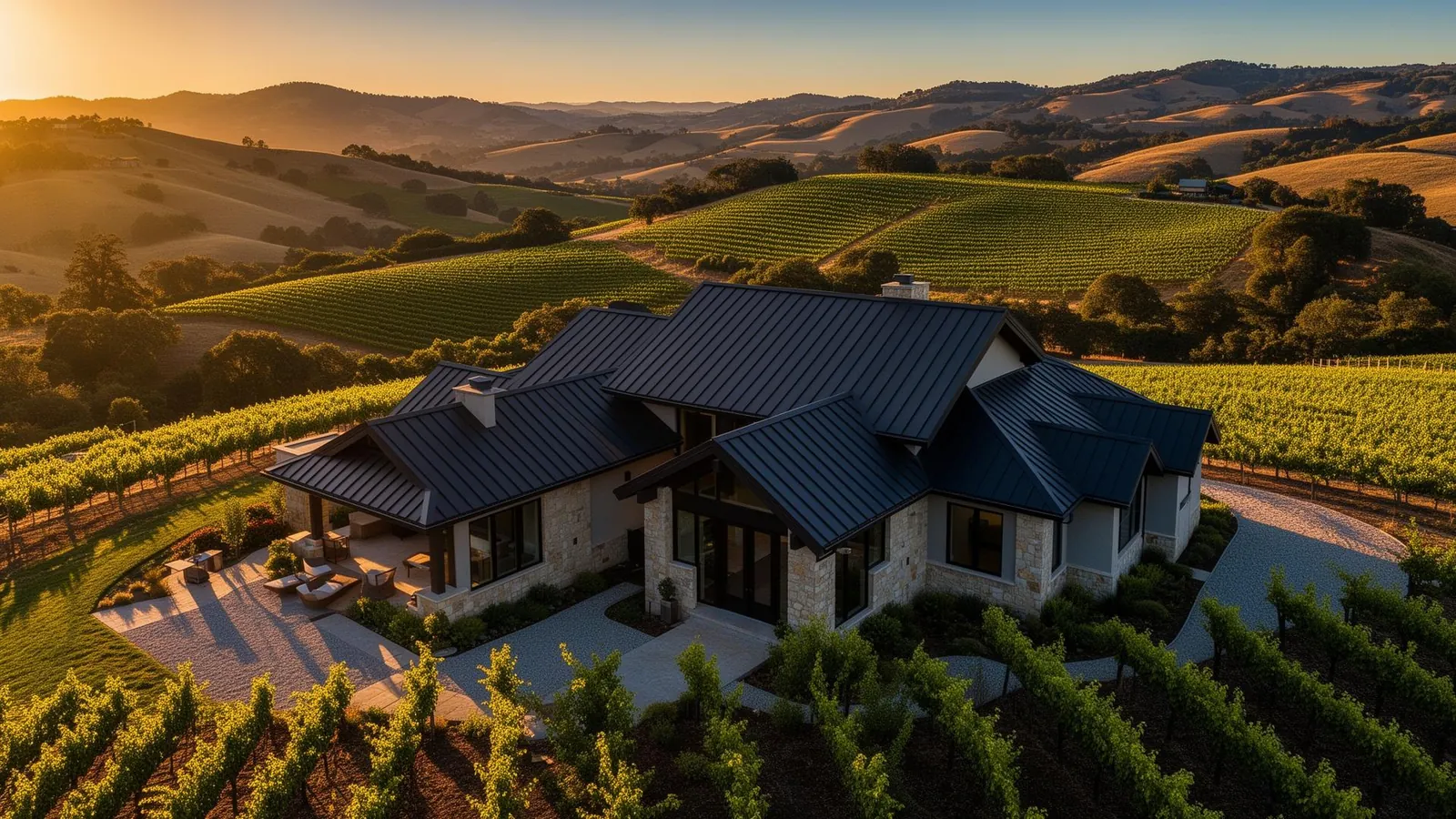
Standing-seam metal
Steel and aluminum panels don't ignite. Embers landing on a metal roof cool quickly because the panel transfers heat into the deck assembly below. The seams are concealed, so there's no exposed edge for embers to lodge under.
This is what we recommend first for hillside homes in east Healdsburg, the Mayacamas, the hills above Glen Ellen, and anywhere with limited evacuation access. The cost premium is real ($30k–$45k versus $18k–$22k for shingle), but in a Very High zone, the math is straightforward.
Concrete and clay tile
Tile is non-combustible. The catch is the underlayment — older tile roofs were installed over 30-lb felt that becomes the limiting factor. Modern Class A assemblies require a two-layer Type 30 felt or, better, a fire-rated synthetic underlayment plus a gypsum board layer between deck and tile.
Tile is heavy (8–12 lbs per sqft for concrete, up to 15 for clay). Many Sonoma County homes need engineered structural reinforcement before we can install. We assess that during the estimate, never as a surprise.
Class A asphalt shingle
A fiberglass-mat asphalt shingle, installed over a fire-rated underlayment on solid sheathing, achieves Class A. It's the most affordable wildfire-rated option and remains the right call for many fire-zone homes — especially in moderate zones (not Very High).
Specifics matter: the shingle must be a Class A product (most modern architectural shingles are; check the wrapper), and the entire roof assembly has to be installed per the listing. Cutting corners on underlayment downgrades the rating.
Where Roofs Actually Fail in Wildfire
It's almost never the field of the roof. It's the edges and openings — the places where embers can find their way underneath.
- Eaves and soffits with non-rated venting. We replace standard vents with ember-resistant Vulcan vents or equivalent on every fire-zone re-roof.
- Open-eave construction with exposed rafter tails. Boxing in the eaves with fire-rated soffit material is a critical detail.
- Valleys with debris buildup. Pine needles in a metal valley become an ignition source. We install closed valleys with metal flashing and recommend annual cleaning.
- Gutters full of leaves. The single highest-ROI ember-defense step is gutter cleaning before fire season.
- Roof-wall intersections with unsealed flashing. Embers find every gap; we use high-temperature sealant on all penetrations.
Defensible Space Is Half the Battle
A Class A roof on a house with juniper bushes touching the eaves is not a fire-safe house. Cal Fire requires Zone 0 (0–5 feet from structure) to be ember-resistant — no plants, no mulch, no firewood. Zone 1 (5–30 feet) requires lean, clean, and green landscaping.
We don't do landscaping, but we'll point out problems we see during the roof assessment. Pair a hardened roof with proper defensible space and your survival probability in a Tubbs-type event jumps dramatically.
What About Insurance?
California's wildfire insurance market is brutal right now. A documented Class A roof — especially metal — can be the difference between a non-renewal letter and renewal at a manageable rate. Some carriers offer wildfire mitigation discounts of 5–25% for metal roofs in fire zones; the FAIR Plan recognizes them in its underwriting.
Bring your roof certificate to your insurance broker. Many homeowners don't realize they're leaving discounts on the table.
Free Wildfire Roof Assessment
If you're in a Sonoma County fire zone and your roof is more than 15 years old, get an assessment now — not after the next red-flag warning. Call 707-503-5507 or request an inspection online.
Frequently Asked Questions
Does a Class A roof guarantee my house survives a wildfire?
Nothing guarantees that. But hardened roofs combined with defensible space dramatically improve outcomes — Cal Fire's post-fire damage assessments after Tubbs and Glass consistently show that homes with Class A roofing and clear Zone 0 had survival rates several times higher than the average.
Can I keep my wood shake roof in a fire zone?
No. California banned new wood shake installations in High and Very High Fire Hazard Severity Zones, and most jurisdictions require replacement at the time of any major repair. We tear off and replace wood shake on most projects in those zones.
Are solar panels a fire risk?
Properly installed panels on a Class A roof don't change the rating. The risk is in poor wiring or skipped flashings around standoffs. We coordinate with solar installers to make sure roof penetrations meet fire-rated assembly requirements.
Get a Free Roof Estimate
Talk directly to Eddy. Call 707-503-5507 or request a written estimate online — no pressure, no salespeople, just an honest assessment of your roof.