You don't need to climb your roof to spot the early warning signs. Most of what tells us a roof is in trouble is visible from the ground or the attic — places you can safely check yourself.
Below is the same two-part checklist we hand to homeowners after every inspection. Print it, walk your house twice a year (spring and fall), and keep notes.
Part 1 — Homeowner Inspection (Ground Level)
From the curb (binoculars help)
- □ Any sagging or waviness in the ridge or rooflines
- □ Missing, lifted, or visibly damaged shingles
- □ Bald or shiny spots indicating granule loss
- □ Dark streaks (algae) or green patches (moss)
- □ Chimney cap intact, no rust streaks down the brick
- □ Skylight glazing intact, no visible cracking
- □ Plumbing pipe boots not visibly cracked or lifted
- □ Gutters not sagging, no separations at corners
- □ Downspouts directing water at least 4 feet from foundation
At the eaves (with a stable ladder)
- □ Drip edge metal in place along the entire eave
- □ Soffit vents not painted over, blocked, or damaged
- □ No visible sagging of soffit material
- □ Fascia board not soft to firm finger pressure
- □ Gutter interior free of granule buildup (pile of black sand = shingle wear)
From inside the attic
- □ No daylight visible through the deck
- □ Insulation dry, no compressed or stained spots
- □ No musty or earthy smell (suggests trapped moisture)
- □ No active drips during/after rain
- □ Soffit and ridge vents clear, not blocked by insulation
- □ No pest evidence (rodent droppings, abandoned nests)
- □ Decking firm under hand pressure where reachable
- □ Rafter undersides free of dark water staining
From the ceiling below (every room)
- □ No yellow, brown, or grey staining on ceilings
- □ No bubbling or peeling paint at ceiling-wall junctions
- □ Bathroom exhaust fans terminating outside (not into attic)
- □ Attic access hatch sealed and insulated
Part 2 — Professional Inspection (What We Do)
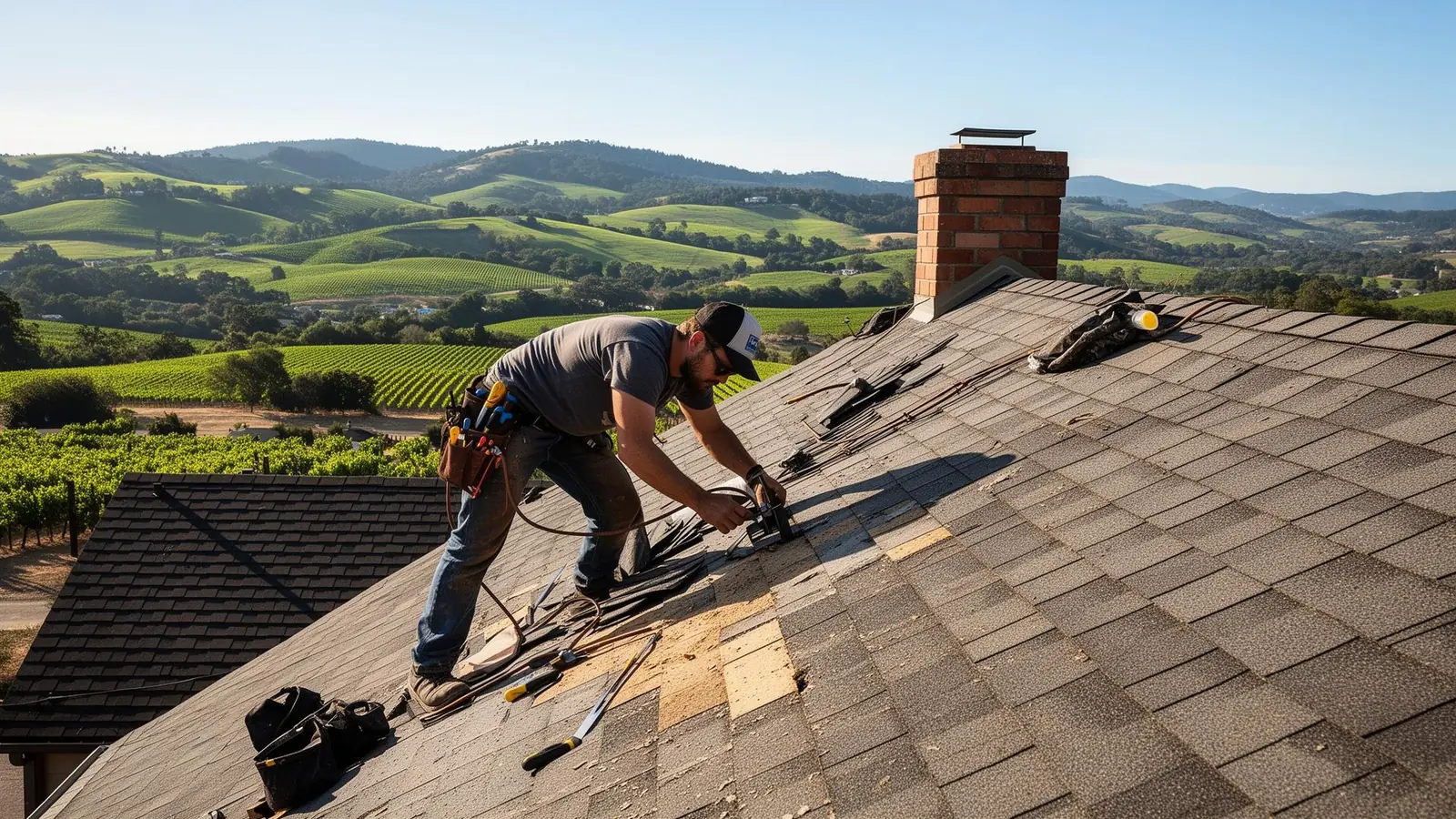
When we inspect a roof, we walk it (when safe), photograph everything, and assess these items in detail.
Field of the roof
- Shingle condition by slope (south slopes weather faster)
- Granule retention — feel for loose granules in the field
- Nail pop count and distribution
- Sealant strip integrity (the strip that bonds shingle courses)
- Hail bruising — visible, soft circular impressions
Penetrations and flashings
- Pipe boot condition — neoprene vs. lead, cracking
- Step flashing at sidewalls, kickout flashing at wall terminations
- Chimney counter-flashing, cricket on uphill side of wide chimneys
- Skylight curb flashing and condensation evidence
- Valley metal — open vs. closed, debris accumulation
- Ridge cap and hip cap — sealed, not cracked
Ventilation
We measure attic ventilation against current code — typically a 1:150 ratio of net free vent area to attic floor space, balanced 50/50 between intake (soffit) and exhaust (ridge or gable). Most pre-2000 homes are out of balance.
Documentation
Every inspection ends with a written report and photos: a A/B/C/D life-grade, prioritized recommendations, estimated remaining service life, and a budgeted replacement cost so you can plan.
Most insurers now request documented roof inspections every 3–5 years to maintain coverage. We can produce inspection documentation in the format your insurer requires.
How Often?
- DIY ground-level check: every 6 months (spring + fall).
- Attic check: at least annually, plus after any major wind event.
- Professional inspection: every 1–2 years for any roof over 10 years old; annually for any roof over 20.
Free inspection in Sonoma County, no obligation: call 707-503-5507 or request online. We come out, walk it, hand you a written report — and if your roof is in great shape, we tell you that.
Frequently Asked Questions
Do you charge for inspections?
Routine inspections for re-roof estimates and homeowner peace-of-mind are free. Detailed insurance documentation reports (with engineering-level findings) carry a small fee, refundable if you proceed with repair or replacement work.
How long does a professional inspection take?
30–45 minutes on a single-story home, 60+ minutes on multi-story or complex roofs. We email the written report within 24 hours.
Can I use your inspection report for an insurance claim?
Yes — our reports include the photo documentation and damage characterization most carriers require. We've worked with State Farm, Allstate, USAA, Liberty Mutual, the FAIR Plan, and most regional carriers.
Get a Free Roof Estimate
Talk directly to Eddy. Call 707-503-5507 or request a written estimate online — no pressure, no salespeople, just an honest assessment of your roof.