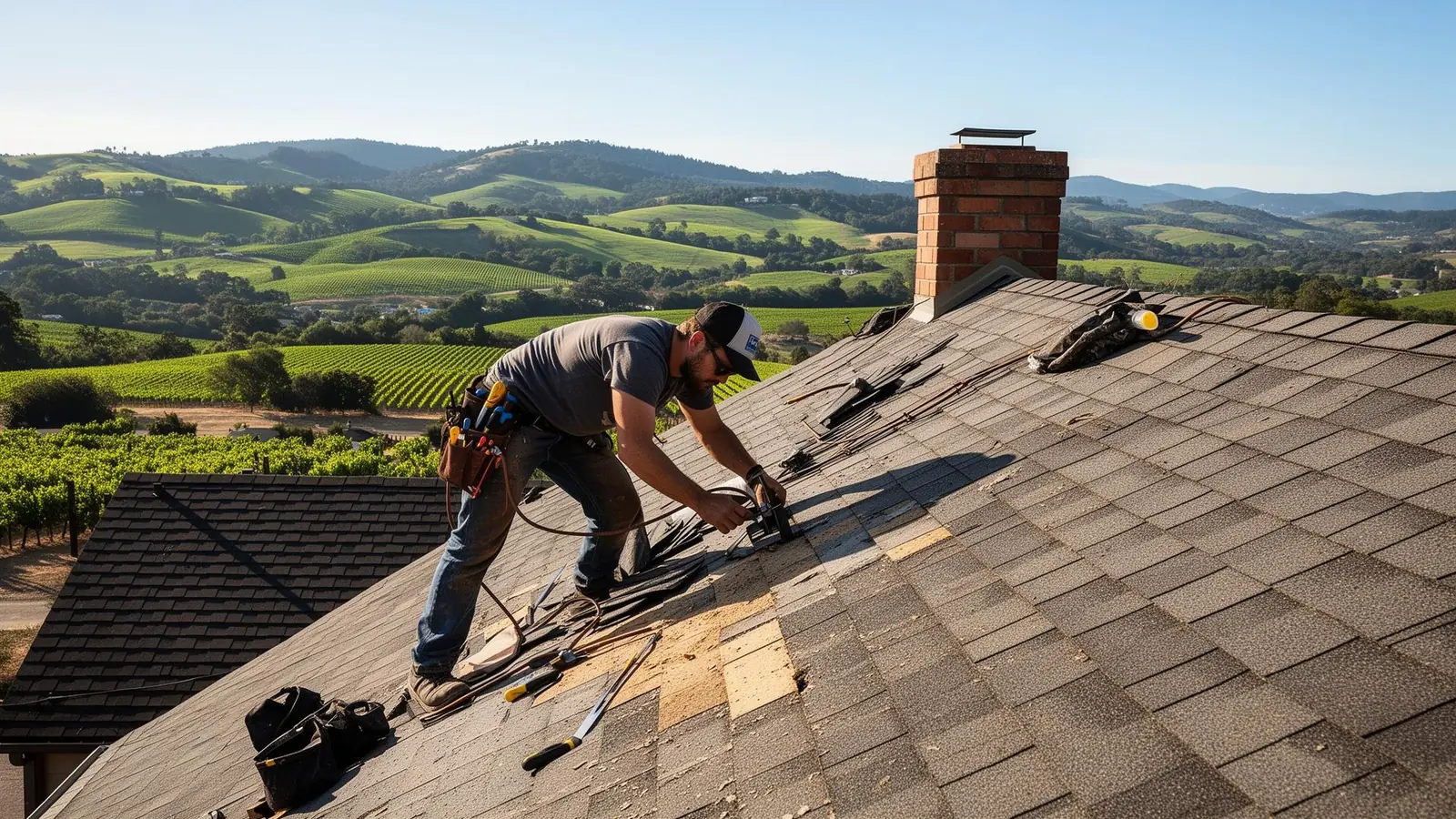
A roof rarely fails on a Tuesday. It fails over a winter, with three weeks of atmospheric river rain finding the weak spot you didn't know you had.
These are the ten signs we look for first when we walk a Sonoma County roof. If you spot two or more, get a real inspection before the next storm season.
1. Curling, cupping, or clawing shingles
When shingle edges lift or the centers cup upward, the asphalt has dried out and the mat underneath is exposed. Once curling starts, it accelerates — wind catches the lifted edge and tears the shingle clean off.
2. Granules in the gutters
Scoop a handful out of your downspout splash block. A few granules after a heavy rain is normal. A consistent layer of coarse black sand means the shingles are shedding their UV protection — usually a 3–5 year warning.
3. Bald patches and shiny spots
Look up at the roof from the ground in afternoon sun. Areas that look shinier than the rest are exposed asphalt where granules have already washed off. Those spots will fail first.
4. Sagging rooflines
Stand across the street and sight down the ridge. Any dip or wave means the decking underneath is failing — usually from long-term moisture. This is structural and urgent.
5. Interior ceiling staining
Yellow or brown rings on a bedroom ceiling almost always trace back to the roof, even if the stain is nowhere near a vent or chimney. Water travels along rafters before it drops, sometimes 15 feet from the actual entry point.
6. Daylight in the attic
Climb up with a flashlight (or have someone do it for you). Daylight visible through the deck, soft spots underfoot, or a musty smell are all immediate red flags. So is any insulation that looks compressed or stained.
7. Energy bills creeping up
An aging roof often correlates with failing attic ventilation and degraded radiant barrier. If your summer cooling bill has crept up 15–20% over a few years with no rate change, the roof system is a likely culprit.
8. Flashing that's separated, rusted, or caulked over and over
Flashings — at chimneys, skylights, walls, and valleys — fail before fields. If you can see daylight gaps, lifted metal, or layers of caulk smeared on as a fix, the underlayment underneath has likely been compromised for years.
9. Moss and algae growth
Common in Sebastopol, Occidental, and anywhere with heavy tree cover. Moss isn't just cosmetic — it lifts shingle edges, holds moisture against the mat, and accelerates rot. Light cases can be treated; heavy growth usually means replacement.
10. Your neighbors are re-roofing
Tract neighborhoods get built in waves. If three houses on your block went up in 1998 and two have already replaced their roofs, yours is on borrowed time. Same builder, same materials, same exposure.
Call 707-503-5507 or request an inspection online. No pressure, no upsell — if your roof has years left, we'll tell you that too.
Frequently Asked Questions
How often should I have my roof inspected?
Once a year for any roof over 10 years old, plus after any major wind event or fallen-tree incident. Most insurers want documented inspections every 3–5 years to keep premiums steady.
Can I just replace part of my roof?
Sometimes — a single slope or a section damaged by a tree. But on a full re-roof job, mixing 25-year-old shingles with new ones almost never matches and shortens the warranty on the new section.
Is moss really a big deal?
Yes. We've torn off Sebastopol roofs where the shingles looked OK from the ground, but the deck underneath was soft from moss-trapped moisture. Treat it early or replace before it spreads.
Get a Free Roof Estimate
Talk directly to Eddy. Call 707-503-5507 or request a written estimate online — no pressure, no salespeople, just an honest assessment of your roof.